글

라벨이 한국음식인 게시물 표시

Korean noodle dish ‘Jjajangmyeon’
이미지
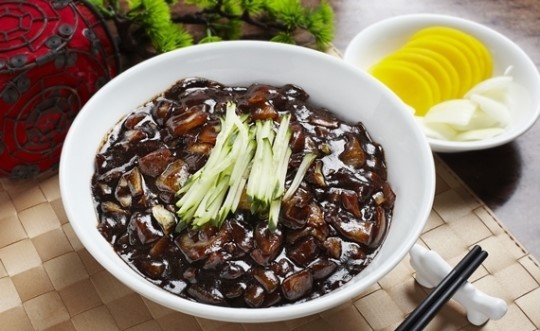
Jjajangmyeon or Jajangmyeon is a Korean-style Chinese dish made by mixing vegetables such as onions, cabbage, pork, and chunjang fried in oil with thick noodles. It is considered a troika menu along with jjambbong and udon. Jajangmyeon is a Korean version of the Chinese Jajangmyeon. Like most Korean-style Chinese dishes based on Shandong cuisine, its representative dish, Jjajangmyeon, originated in Incheon. Jjajangmyeon is very popular in Korea. Historically, it is a traditional food that has already been around for over 100 years, and along with chicken, it is one of the top three menu items in Chinese restaurants, along with the two major delivery foods, Jjambbong, and sweet and sour pork. Among them, the most frequently selected menu item at Chinese restaurants is by far Jjajangmyeon, which ranks first in preference, easily overpowering other menu items at restaurants. Because it is such a popular food, Jjajangmyeon is a food that holds many memories for each Korean. Jjajangmyeon re...
Korean noodle dish ‘Japchae’

이미지
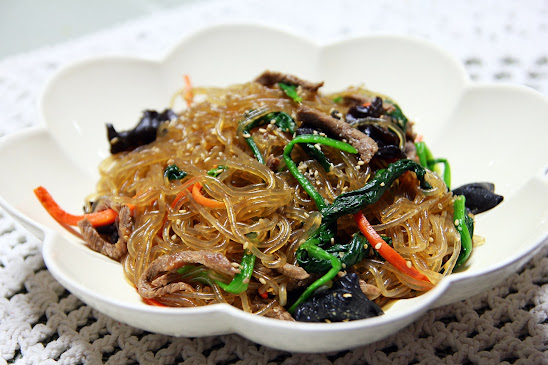
 One of the foods that often appears on the Korean table is japchae. Noodles made from sweet potato starch are stir-fried and seasoned with soy sauce and various ingredients such as spinach, carrots, beef, and onions. Japchae is the most popular food served at parties or holidays. Japchae was originally a food eaten at the royal court made by boiling cucumbers, radishes, bean sprouts, bellflower root, etc. Japchae is very popular among foreigners as it can have a variety of flavors depending on the ingredients used. With the recent Korean Wave craze and increasing global interest in Korean food, many foreigners also like Japchae once they try it, saying, “It is similar in shape to European pasta, but has a completely different taste.” Depending on the taste preferences of people in each country or region, various ingredients such as 'eel japchae', 'seafood japchae', and 'mushroom japchae' can be added. Japchae is also pleasing to the eyes. It is visually gorgeou...

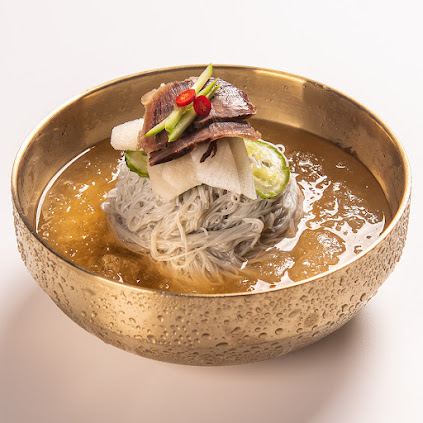
Korean noodle dish ‘naengmyeon’

이미지
  Naengmyeon is one of Korea's unique cold noodle dishes, made by putting boiled noodles in cold broth and topping them with seasoning and toppings. Based on literature records, Naengmyeon is presumed to have been a favorite food since the Joseon Dynasty, and is still one of the foods enjoyed by many people. Naengmyeon is a food made with pressed noodles made by mixing buckwheat flour with a little starch, and was mainly developed in the northern region where buckwheat is produced in large quantities. Then, after the Korean War, it was spread throughout the country by Vietnamese people, and is now considered one of Korea's representative foods. The method of making it varies slightly depending on the region, but generally, it is made by mixing buckwheat flour with a little starch to make noodles, then topping it with garnishes such as sliced pork, cucumber slices, pear slices, stir-fried beef, and boiled eggs, and pouring in the broth. Cold noodle soup is made from beef broth, ...

Korean noodle dish ‘Guksu’

이미지
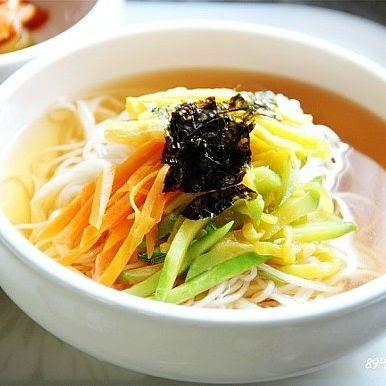
 It is a noodle dish made by boiling somen. Many people like noodle dishes because they are good as a meal and easy to eat. When you think of noodle dishes, the first things that come to mind are banquet noodles and bibim noodles. But there are many other types of noodles. Noodles flourished greatly in the wheat flour civilization, but it also gave rise to a unique historical irony in that it became a representative food culture in the Korean Peninsula, where there was little wheat. Numerous noodles cooked in various ways have now become a mainstay of Korean food culture. Source_Myeonsarang ‘Is banquet noodles a traditional food?’

Korean noodle story

이미지
 According to the Comprehensive Agricultural Book of the late Joseon Dynasty, wheat was precious in Goryeo and could not be eaten except during sacramental occasions, and 'Gosashi Twelve' states, "Noodles were originally made from wheat flour, but in Korea, noodles are made from buckwheat flour," which suggests that they are Chinese noodles. Contrary to this, it can be seen that the ingredient of Korean noodles is not limited to flour. Food made by kneading flour such as wheat, buckwheat, potato, etc. and rolling it into thin slices or thinning it with a noodle mold, or boiling it and eating it by rolling it in soup or mixing it. It is cotton · Myeonja. After the 1900s, rotary pressure noodle molds were developed, and dried wheat noodles made from dried wheat noodles began to be distributed, and after 1945, as imported wheat flour increased, various wheat noodle dishes became common. *Photo_Paradise Blog Types of Korean noodles (한국 면의 종류) Source_TOP Digital News in Au...

Korean soul food, pork belly

이미지
 Why are Koreans crazy about pork belly? Why pork belly became the ‘national meat’ What meat do Koreans eat the most? After all, you’re a chi god? Eating beef on a nice day? Or soju’s companion pork? The correct answer is pork. In a survey of meat consumption per capita in 2018, pork ranked first, beating chicken and beef. Pork is Koreans’ favorite meat. My favorite part of pork is, without a doubt, pork belly. Pork belly is the belly part of a pig. This part is called ‘Pork Belly’ in English. This part is given the name samgyeopsal because it has multiple layers of fat and meat. But since when did Koreans start liking pork belly so much? And why do I like pork belly so much? Source_Snob ‘Why Koreans like samgyeopsal, the history of samgyeopsal’ 출처_스노브 ‘한국인이 삼겹살을 좋아하는 이유, 삼겹살의 역사 It is said that people did not like pork very much during the Joseon Dynasty. However, ancient Koreans often ate pork, which we know as ‘maekjeok’. It is a food made by marinating pork in soy sauce or soyb...

Korean soul food, pancakes

이미지
  Buchimgae (English: Buchimgae or Korean pancake) is a food made by frying thick batter with finely chopped ingredients in oil thinly and widely. It is also called pancake, jjim, jjimgae, jijimi, and jeonbyeong. Unlike jeon, it is cut into small pieces and kneaded with flour, ignoring the shape of the ingredients. Representative examples include pumpkin pancakes made with shredded zucchini and kimchi pancakes made with finely chopped cabbage kimchi. Pancakes in a broad sense include press, bindaetteok, jangtteok, and pancakes made by frying in oil. ▶ Types of pancakes chive pancake_부추전   Kimchi pancake_김치전 Pajeon_파전 pumpkin pancake_호박전 cabbage pancake_배추전 potatopancake_감자전 Making pancake seasoning (soy sauce)_부침개 양념장(간장소스) 만들기

Foods only Koreans eat

이미지
Foods that only Koreans mainly eat include acorn jelly, bean sprouts, whelk, perilla leaves, midea duck, melon, and soy sauce crab. It is known that some of these foods are neglected overseas because replaceable foods are popular. acorn(도토리) Aged acorns are a native food with a longer history than you might think. Mature acorns were often featured on the king's table and are also famous as a food that saved the people who had nothing to eat during a famine. Acorns are a food made by dissolving acorn starch in water, boiling it, and hardening it. The slightly astringent yet soft taste of acorns is excellent. Because of the astringent taste caused by the tannin component, you cannot eat a large amount at once, but it has a high water content and makes you feel full, but it is low in calories, so it is often used as a diet food. Korea melon(참외) Melon, also called 'Korea melon' among foreigners, is one of the summer fruits loved for its crunchy texture and sweet juice. It is sa...

Korean beef bulgogi restaurant. Korean representative menu.

이미지
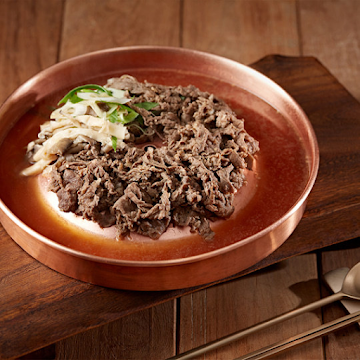
  ▶ Thumbs up even for foreigners! 5 Bulgogi Restaurants in Seoul ( 외국인도 엄지 척! 서울 불고기 맛집 5곳 ) 1. Hongdae 'Old Taste Seoul Bulgogi' Location: 71 Seogang-ro, Mapo-gu, Seoul Business Hours: Daily 11:30 – 22:00, B/T 14:00 – 16:30, Closed on the 2nd and 4th Sundays Price: Beef Bulgogi 17,000 won, Galbitang 9,000 won 2. Seoul-style Bulgogi, Apgujeong 'Hanilgwan Apgujeong Branch' Location: 14 Apgujeong-ro 38-gil, Gangnam-gu, Seoul Opening Hours: Daily 11:30 – 21:30 Price: Hanilgwan Bulgogi table setting (lunch menu) 31,000 won, Bulgogi 1939 30,000 won 3. A restaurant hidden in a narrow alley, Euljiro 'Bongganok' Location: 12 Changgyeonggung-ro 8-gil, Jung-gu, Seoul Business Hours: Daily 10:00 – 22:00, closed on Sundays Price: Bulgogi 15,000 won, sirloin stew 25,000 won 4. Secret sauce handed down from third generation, Gangnam Station 'Sariwon Seocho' Location: 136 Seoun-ro, Seocho-gu, Seoul Opening Hours: Daily 11:30 – 22:00 Price: Sariwon Bulgogi 32,000 won, ...